Vintage Shield Badge Vector Bundle
First Impressions: Timeless, Tactile, and Ready for Thread
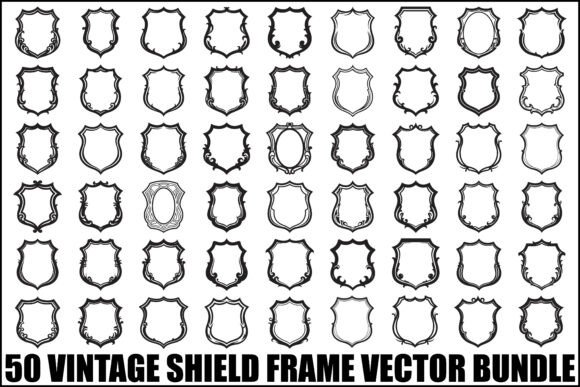
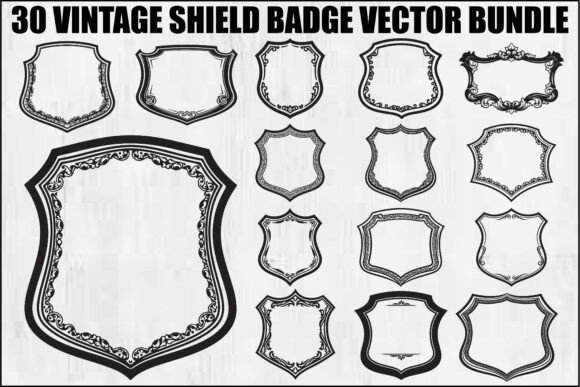
Opening the Vintage Shield Badge Vector Bundle, I didn’t just see 30 shield-shaped illustrations—I felt a quiet confidence. These aren’t cartoonish or overly ornate; they’re grounded in classic heraldic rhythm: balanced symmetry, restrained flourishes, and subtle negative space that *breathes* when stitched. As an embroidery designer who’s stitched hundreds of badges onto everything from linen tea towels to organic cotton baby onesies, I immediately pictured how the clean outer contours would register on fabric—no jagged edges, no fragile filigree that vanishes under satin stitch. The vintage mood isn’t costume-y; it’s warm, trustworthy, and quietly authoritative—exactly what handmade brands need when customers are choosing between “just another tote” and something that feels heirloom-adjacent.
A Real Project Test: Embroidering a Linen Apron for a Local Bakery
Last week, I used one of these shields—a compact, centered design with a small wheat motif and serifed “Hearth & Oven” lettering—to embroider a custom apron for a neighborhood sourdough bakery. Why this bundle worked so well: the shield’s proportions fit neatly inside a 4×4 hoop without crowding, the line weight held up beautifully in medium-density fill stitch, and the open center allowed me to add a subtle tonal thread accent (soft oatmeal over natural linen) without muddying the shape. Customers noticed it—not as “cute graphics,” but as *craftsmanship*. One even asked if it was hand-embroidered. That’s the signal you want: when the design supports the handmade story instead of competing with it.
Where It Shines—and Where to Pause
The Vintage Shield Badge Vector Bundle excels in projects where clarity, heritage, and quiet distinction matter:
- Custom apparel: Sweatshirt chest logos, back-of-cap emblems, and sleeve patches gain instant character without shouting.
- Baby and nursery items: On organic cotton burp cloths or muslin pillow covers, the soft geometry reads as gentle tradition—not stiff formality.
- Tote bags and tea towels: The shield’s vertical emphasis anchors horizontal surfaces, making text legible at arm’s length.
- Holiday and wedding gifts: A monogrammed shield on a linen napkin or embroidered coaster feels intentional, not generic.
- Etsy listings and boutique branding: Use one as a consistent logo badge across product tags, packaging seals, and digital mockups—it builds visual continuity fast.
But let’s be practical: not every shield in the bundle is equally forgiving. If you’re stitching on:
- Thin or stretchy fabric (like jersey tees): Avoid shields with tightly packed inner ornamentation—those fine scrolls can blur or pucker without heavy cutaway stabilizer.
- Dark fabric with light thread: Check the vector outlines first. Some shields use delicate interior lines that may disappear unless converted to bold running-stitch borders.
- Curved surfaces (caps, curved pillow fronts): Stick to the simpler, bolder shields—avoid those with intricate corner flourishes that distort when hooped.
- Items needing frequent washing (baby bibs, kitchen towels): Prioritize designs with generous stroke weight—thin serifs or hairline dividers won’t survive 20+ cycles.
What It Does for Your Finished Product—Beyond Looks
This isn’t just about prettiness. The Vintage Shield Badge Vector Bundle subtly elevates perception: a plain cotton tote becomes a *brand touchpoint*; a simple sweatshirt reads as *curated*, not mass-produced; a personalized baby gift gains emotional weight through symbolic form. Customers don’t buy “a vector file”—they buy trust, care, and intention. When your embroidery uses a well-proportioned, historically resonant shape like these shields, it tells people: *This wasn’t slapped on. It was chosen.* That translates directly to higher perceived value, stronger Etsy reviews (“so well made!”), and repeat buyers who recognize your visual language across products.
Embroidery Designer Notes—No Guesswork Allowed
Before stitching, do these five things:
- Test on scrap fabric—especially if using textured weaves (burlap, terry cloth) or blends. See how the outer shield edge holds up under satin stitch tension.
- Review stitch density in your embroidery software. Some shields look airy on screen but generate dense fills—adjust if needed for breathable fabrics.
- Confirm hoop size compatibility. Most shields scale cleanly, but a few with wide banners or tall crests may push past 5×7 limits. Measure before digitizing.
- Inspect small details in black-and-white mockups. Will that tiny laurel sprig read at 1.5" tall? If not, simplify or omit.
- Verify licensing—since this is an Illustrations bundle marketed for Graphics use, confirm whether commercial embroidery rights (e.g., selling finished embroidered patches or apparel) are included. When in doubt, contact the seller.
Final Thought: A Design Asset That Ages Well
I keep returning to this bundle—not because it’s flashy, but because it’s reliable. In a world of trend-driven clipart, these 30 shields feel like tools, not decorations. They work for a teen’s custom cap, a grandparent’s holiday pillow, a craft fair vendor’s booth banner, and a small-batch soap label—all without changing voice. That versatility isn’t accidental. It’s built into the balance, the spacing, the restraint. If you’re curating design assets for real embroidery work—not just screen previews—you’ll reach for the Vintage Shield Badge Vector Bundle again and again. Not as filler. But as foundation.