Jellyfish Line Art Collage: Graphics & Illustrations
First Impression: Calm, Flowing, and Unexpectedly Versatile
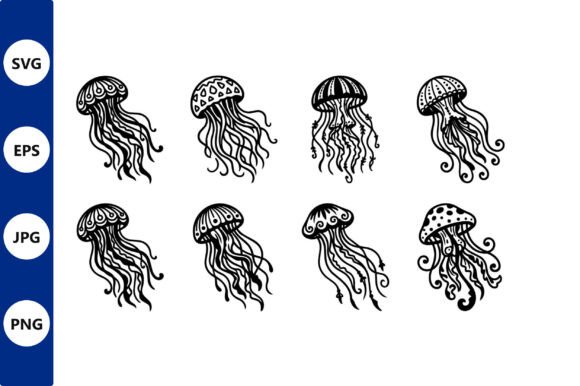
When I opened Jellyfish Line Art Collage for a client project—a coastal-themed artisan tea brand launching seasonal packaging—I felt immediate visual relief. This isn’t busy clipart or over-rendered SVG design. It’s a set of black and white jellyfish line art illustrations arranged as a vector collage, each with rhythmic, flowing tentacles and subtle decorative shells. The mood is quiet but intentional: serene ocean energy without cliché seashells or cartoonish charm. It leans into modern design while honoring handmade business sensibility—ideal for small business branding that values authenticity over trend-chasing.
Where It Shines in Real Client Work
Jellyfish Line Art Collage performs exceptionally well where atmosphere matters more than literal meaning. For the tea brand, we used it across multiple touchpoints: as a hero graphic on product mockups, as a repeating pattern on kraft paper labels, and as a subtle watermark behind hand-lettered ingredient lists. Its balance and rhythm support—not compete with—typography, especially when paired with soft serif fonts or clean sans serifs. It also translated beautifully into sublimation design for reusable tote bags and ceramic mugs, holding detail at mid-size (3–6 inches) without pixelation or visual clutter.
As social media graphics, it elevated Instagram posts and Pinterest pins—adding organic texture to flat Canva templates without overwhelming the message. For Cricut projects, the vector-based structure made scaling and layering effortless, and the clean lines cut precisely on vinyl and cardstock. As printable design, it worked in editorial layouts (think: zine spreads or blog headers), sticker design collections, and even invitation suites where clients wanted “ocean calm” without literal water imagery.
Strategic Placement: Hero, Accent, or Thematic Anchor?
This graphic design asset excels in large layout areas—hero sections, poster backgrounds, and packaging wrap-arounds—where its flow can breathe. It’s especially effective in themed collections: think summer launch campaigns, wellness bundles, or coastal boutique merch lines. As a decorative accent, it adds sophistication to corner details on greeting cards or website footers. In product mockups, it grounds digital presentations with tactile, natural rhythm. And for print-on-demand sellers, its black-and-white simplicity ensures consistent color reproduction across platforms—no CMYK surprises, no ink bleed concerns.
Where Caution Is Needed
Don’t force Jellyfish Line Art Collage into cramped spaces. At under 1 inch wide, the delicate tentacle details blur; readability suffers, and visual hierarchy collapses. Avoid pairing it with complex backgrounds—it needs breathing room, not noise. It’s not suited for minimalist corporate branding (think law firms or fintech dashboards) where absolute clarity and neutrality are non-negotiable. Likewise, skip it for low-contrast designs (e.g., light gray on off-white) or professional presentations demanding stark visual authority. Its strength is emotional resonance—not functional minimalism.
Impact on Brand Trust and Audience Connection
Used thoughtfully, this illustration builds visual trust. Its hand-drawn precision suggests care; its oceanic calm signals mindfulness—key for wellness, self-care, and eco-conscious audiences. Clients report higher engagement on social posts featuring Jellyfish Line Art Collage versus generic stock vectors, likely because it feels curated, not algorithmic. It strengthens brand consistency when repeated across touchpoints—not as a logo, but as a supporting brand element that quietly reinforces mood and values. That’s rare in ready-made design assets.
Practical Designer Notes Before You Deploy
- Test contrast rigorously: Preview on both light and dark backgrounds—some tentacle lines thin out on black, so check SVG stroke weights.
- Scale it live: Drop it into actual mockups at intended sizes—not just in your design app. Does it hold character at 24px? At 24 inches?
- Verify file integrity: Confirm the included SVG design is fully editable (no embedded raster elements) and that PNG versions have crisp transparency.
- Font pairing matters: It harmonizes with serif fonts (e.g., Playfair Display), friendly sans serifs (e.g., Poppins), and restrained script fonts—but clashes with heavy display fonts or aggressive handwritten styles.
- Licensing first: Double-check commercial license terms before using in Etsy product listings, t-shirt design, or client deliverables. This is a commercial design asset—treat it like one.
- Print test early: Run a physical proof. Some fine lines disappear on uncoated paper or low-DPI printers—especially on kraft or recycled stock.
Final Verdict: A Thoughtful Addition to Your Design Assets Toolkit
Jellyfish Line Art Collage isn’t a Swiss Army knife—it won’t solve every visual problem. But for designers building cohesive, emotionally intelligent brand identities for handmade business, wellness brands, boutique publishers, or coastal creatives, it’s a rare find: a black and white illustration that feels alive, balanced, and quietly confident. It supports creative design without shouting. It elevates printable design without overcomplicating. And as a vector-based graphic, it scales cleanly across web design, packaging design, and physical merchandise. When your client needs calm, rhythm, and understated elegance—not flash—this is the kind of design bundle that earns repeat use, not one-off deployment.