Rose Line Art Vector Set
First Impression: Clean, Quiet, and Confidently Minimal
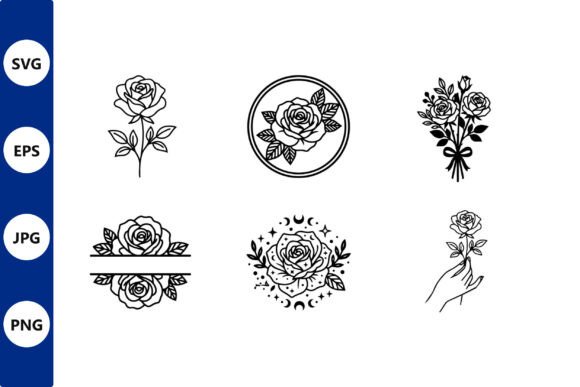
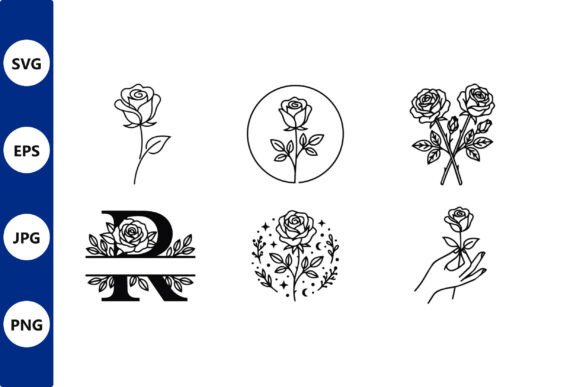
Opening the Rose Line Art Vector Set feels like unrolling a sheet of tracing paper—light, intentional, and full of breathing room. These aren’t fussy roses dripping with petals or baroque swirls. They’re black-line silhouettes: a single stem, a circular framed bouquet, a decorative initial, a hand gently offering a rose. The monochrome simplicity reads as both timeless and contemporary—like something you’d stitch on a linen tea towel for a wedding gift *and* screen-print on a small-batch apron for your café’s staff.
I immediately pictured it on a natural canvas tote bag—no background fill, just crisp black thread on oat-colored fabric. No need to over-explain the design; it speaks quietly but clearly. That’s rare in embroidery assets. Too many “rose” designs lean into romance clichés or floral overload. This set avoids that entirely. It’s botanical, not bridal. Structured, not sentimental.
Where It Shines: Real Projects, Real Customers
Last week, I prepped a custom order for a local boutique: embroidered baby onesies and matching burp cloths. We needed something soft enough for newborn skin but distinctive enough to stand out in their curated nursery section. Rose Line Art Vector Set delivered—especially the single stem and circular bouquet. On lightweight cotton interlock, the clean lines translated beautifully in satin stitch with minimal underlay. Customers didn’t just say “cute”—they said, “It looks *designed*, not stamped.” That distinction matters when you’re pricing handmade product at $48 instead of $28.
It also worked well for a limited-run sweatshirt line. We used the hand-presenting-a-rose motif centered on the chest of heavyweight French terry. Because the outline is bold and unbroken—not pixelated or overly thin—it held up even at 3.5 inches wide. No fraying, no skipped stitches, no stabilizer bleed-through. And because it’s vector-based, scaling was effortless: same clean edge whether we stitched it at 2 inches (for a cap) or 5 inches (for a pillow cover).
Etsy sellers will appreciate how naturally this set supports storytelling. Pair the decorative initial with a client’s name for personalized baby blankets. Use the circular bouquet as a subtle repeat pattern along the hem of a kitchen towel. Even the “hand presenting a rose” reads as gesture—not just image—which adds warmth to greeting cards, printable mockups, or boutique gift tags.
Where to Proceed Thoughtfully
This isn’t a one-size-fits-all embroidery file. Its strength is its restraint—and that restraint demands attention in certain contexts.
- Small hoop sizes: The circular bouquet and framed designs include fine interior spacing. Below 3 inches, test stitch density carefully—tight curves can bunch if fill stitch is too aggressive.
- Textured or stretchy fabrics: On terry cloth or ribbed knit, the line art’s clarity depends heavily on stabilizer choice. A light tear-away works for towels; medium cut-away is safer for baby knits.
- Dark or dense backgrounds: Since it’s monochrome line art, contrast relies entirely on thread color. Black thread on navy denim? Strong. But charcoal thread on heather grey? Might disappear. Always preview in black-and-white mockups first.
- Curved surfaces (caps, hats): The single stem adapts easily—but avoid placing the circular frame directly over the crown seam unless you’ve tested stitch pull on a real cap blank.
- Frequent-wash items: Linen napkins, kids’ bibs, tea towels—these need solid satin or running stitch definition. Avoid converting delicate interior linework into sparse fill stitch. Keep it bold, keep it anchored.
What It Adds to Your Finished Product—Beyond Stitching
Using Rose Line Art Vector Set doesn’t just fill space—it elevates perception. On a handmade product, that clean line signals intentionality. Customers don’t see “a rose.” They see *craftsmanship*. That impression boosts trust, justifies higher pricing, and makes your Etsy listing feel more editorial than algorithmic.
For craft business owners, it supports brand consistency without locking you in. You can use the same motif across patches, packaging stamps, and digital product previews—and it still feels cohesive, not repetitive. For holiday embroidery or wedding gifts, it reads as thoughtful rather than generic. And because it avoids seasonal tropes (no holly, no hearts), it stays relevant year-round.
Practical Designer Notes Before You Stitch
- Always test the design on scrap fabric *first*—especially with your exact stabilizer and thread combo.
- Review stitch density in your embroidery software. If interior lines are too tight, slightly reduce density to prevent puckering.
- Confirm hoop size compatibility—some circular frames may require a 5x7 hoop for comfortable digitizing headroom.
- Inspect small details at actual stitch scale: tiny loops in the hand motif, stem taper, petal separation. What looks sharp on screen may blur when stitched.
- Try it in black-and-white mockups on both light and dark fabric swatches—this reveals contrast issues faster than any screen preview.
- Use proper stabilizer for your fabric type—don’t assume “lightweight” means “no stabilizer.” Even monochrome line art needs support on knits or loose weaves.
- Check licensing before selling finished items or bundling the vector files as part of a digital product. Rose Line Art Vector Set is categorized as Illustrations and Graphics—confirm whether commercial use is permitted for your intended application.
In short: Rose Line Art Vector Set earns its place not by shouting, but by holding space—cleanly, confidently, and consistently. It’s the kind of embroidery asset that disappears into the product while making everything around it feel more considered. Whether you’re stitching a baby onesie, designing a boutique apron, or building a cohesive Etsy shop aesthetic, this set doesn’t distract. It delivers.