Wall Shelf Bracket Vector Bundle
A Clean, Confident Line Art That Stitches With Purpose
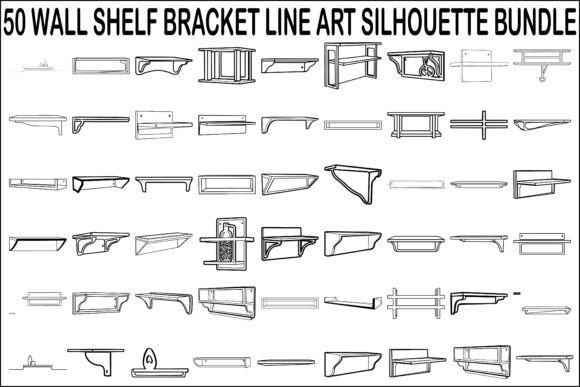
As someone who’s stitched hundreds of designs onto everything from organic cotton baby onesies to heavyweight denim tote bags, the first thing I notice about the Wall Shelf Bracket Vector Bundle isn’t just its visual clarity—it’s its quiet confidence. These aren’t fussy, over-rendered illustrations. They’re precise, uncluttered line art silhouettes: architectural yet approachable, modern without being cold, decorative without sacrificing function. When I opened the bundle and scrolled through the 50 bracket variations—some angular and minimalist, others with subtle curves or delicate finials—I immediately pictured them on a linen apron for a boutique kitchen shop, or as a single embroidered motif on the chest of a charcoal sweatshirt for a home goods brand.
Where This Bundle Earns Its Place in Real Embroidery Work
I recently used one of the simpler bracket designs (a clean, open L-shape with tapered ends) as the central motif on a custom-embroidered tea towel set for a local maker’s holiday pop-up. The result? Crisp, legible stitching—even at 3.2" wide—with no bleeding, no thread nesting, and zero distortion on the medium-weight cotton twill. That’s not accidental. The Wall Shelf Bracket Vector Bundle is built for translation: its consistent stroke weight, generous negative space, and lack of tight interior corners mean it converts cleanly into an embroidery file without aggressive auto-digitizing cleanup.
It shines especially well in contexts where subtlety reads as sophistication: embroidered patches for craft fair merch, monogrammed shelf brackets on nursery pillows, or as part of a coordinated set on matching kitchen towels and oven mitts. For Etsy sellers, this is gold—it’s distinctive enough to stand out in search, but neutral enough to pair with fonts, florals, or geometric accents without clashing. And because each design is a silhouette—not a filled graphic—it works beautifully as both a standalone motif and a framing element around text or small icons.
What to Watch For—Because Not Every Fabric or Fit Is Equal
That said, realism matters. This bundle isn’t magic dust. On stretchy fabrics like jersey or lightweight knits, even a simple bracket outline can waver if stabilizer isn’t layered thoughtfully—especially near the outer curve or tip of the bracket arm. I recommend a medium-weight cutaway + tear-away combo for anything that moves or wears often (think baby bodysuits or aprons that go through weekly washes). And while the line art style helps avoid dense fill stitch areas, some of the more ornate bracket designs include fine interior detailing—like tiny scrollwork or intersecting crossbars—that may not resolve cleanly below 2.5" in hoop size or on textured fabrics like terry cloth or bouclé.
Dark fabric demands attention too. A thin black line on navy denim? Gorgeous—if your thread contrast is sharp and your digitizing preserves edge definition. But if you’re working with low-contrast thread (e.g., charcoal on black), test it first. Same goes for curved surfaces: caps and beanies compress design width. One of the wider bracket profiles looked slightly squashed on a curved cap front until I adjusted the aspect ratio by 5% horizontally. Small tweak, big difference.
Why It Builds Trust—Not Just Decoration
Customers don’t buy “bracket graphics.” They buy intention. When someone sees a carefully stitched shelf bracket on a handmade pillow cover, they read craftsmanship, attention to detail, and a cohesive aesthetic—not just a random clipart import. The Wall Shelf Bracket Vector Bundle supports that perception because it feels *designed*, not assembled. Its consistency across 50 variations means you can build a recognizable visual language: same stroke weight, same rhythm, same balance between structure and airiness. That kind of coherence strengthens brand consistency for small shops—and makes buyers feel like they’re choosing something considered, not generic.
And for personalized gifts? It’s quietly versatile. Pair a bracket motif with a client’s name in a clean sans-serif, and you’ve got a wedding gift that nods to shared domestic life without cliché. Use it alongside a tiny plant icon on a baby onesie, and it becomes a gentle nod to growth and support. No forced sentiment—just thoughtful resonance.
Practical Designer Notes Before You Stitch
- Always test on scrap fabric first—especially if using textured, dark, or stretchy materials.
- Review stitch density in your embroidery software: line art should translate to running or satin stitch with minimal underlay, but confirm no unintended jump stitches or overlapping paths.
- Check hoop size compatibility early—some bracket profiles span wider than standard 4x4 hoops; know which designs fit your most-used frame.
- Inspect small details at 200% zoom in your embroidery editor: are interior angles clean? Are endpoints rounded or squared? That affects how crisply they stitch.
- Test black-and-white mockups before finalizing thread colors—this bundle’s strength is in contrast and form, not color complexity.
- Use proper stabilizer for your fabric type and end use—lightweight tear-away for stable cottons, cutaway for knits or heirloom items.
- Confirm licensing terms before selling finished products or digital embroidery files—this is an Illustrations bundle, not pre-digitized embroidery files, so digitizing and commercial use rights depend on the source license.
Final Thought: Design That Serves the Maker First
The Wall Shelf Bracket Vector Bundle doesn’t shout. It doesn’t need to. Its value lies in reliability—the kind that lets you say “yes” to a custom tote bag request, a boutique’s seasonal collection, or a last-minute holiday gift without second-guessing legibility, scalability, or stitch integrity. It’s the kind of Graphics asset that disappears into your workflow, then reappears beautifully in the finished product: clean, confident, and quietly intentional. For embroidery designers, craft business owners, and makers who treat every stitch as a signature—this bundle earns its place in the toolkit.