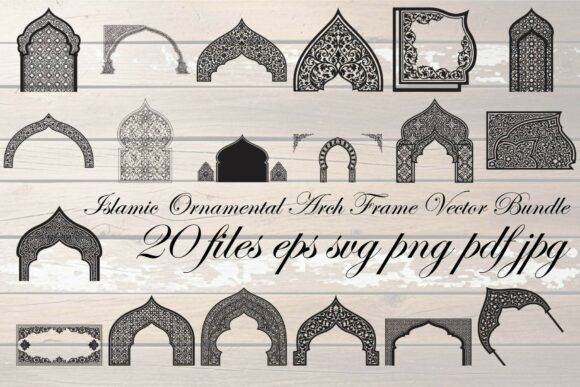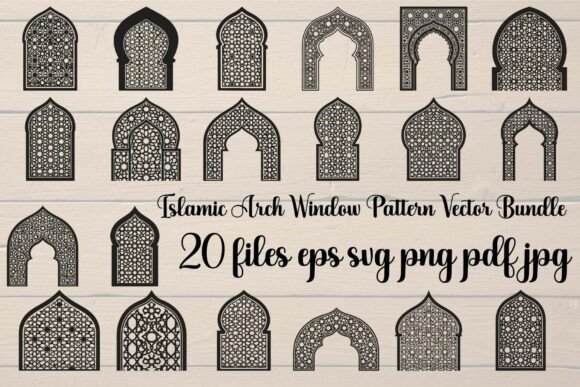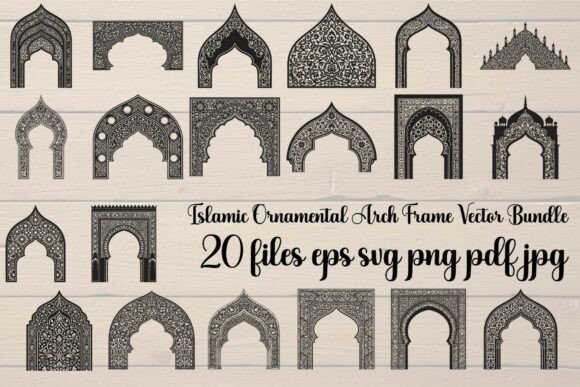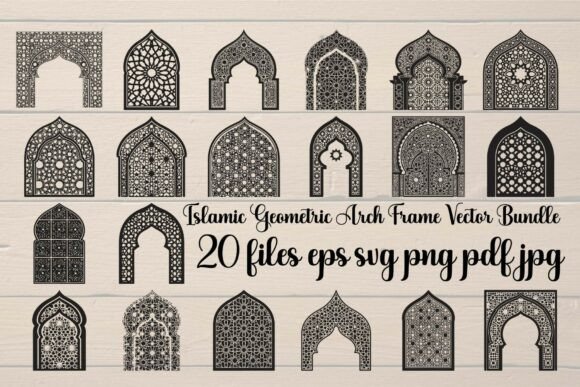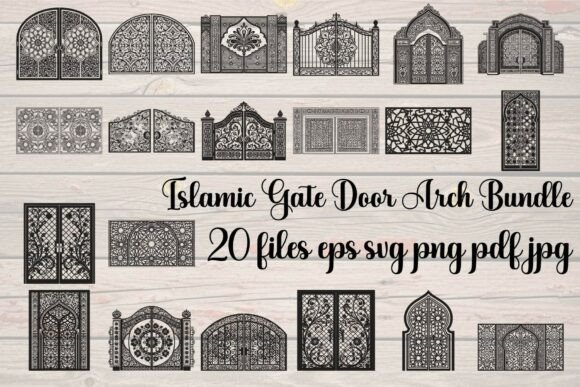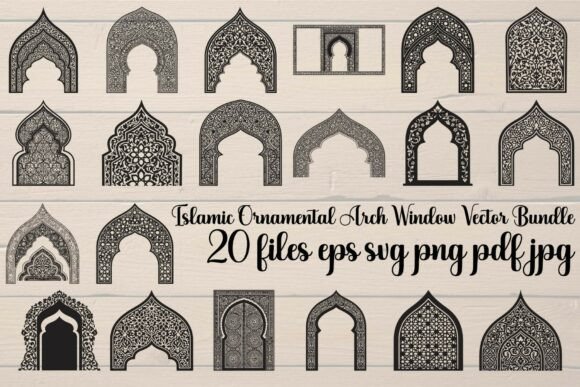
Islamic Ornamental Arch Window Vector: Graphics & Illustrations
As someone who’s launched over 200 digital product listings across Etsy, Creative Fabrica, and Shopify—and scaled three print-on-demand collections—I opened Islamic Ornamental Arch Window Vector with clear intent: not just to admire it, but to assess its real-world utility for commercial design. My first impression? It’s elegant, deeply intentional, and quietly confident—not flashy, but rich in cultural resonance. The mood leans toward refined tradition with quiet modernity: geometric precision meets organic floral rhythm. It feels premium, decorative, and spiritually grounded—ideal for buyers seeking authenticity in faith-based decor, mindful interiors, or culturally rooted branding.
This isn’t playful or minimalist. It’s not “cute” or “trendy” in a fleeting sense. Instead, Islamic Ornamental Arch Window Vector carries the weight and warmth of heritage craftsmanship—transposed into clean, scalable vector form. That makes it especially valuable for sellers targeting conscious consumers: educators creating Ramadan lesson kits, Muslim-owned small businesses building brand identity, interior designers sourcing printable wall art, or Canva template sellers curating inclusive seasonal bundles (Eid, weddings, home blessings).
In practice, I tested Islamic Ornamental Arch Window Vector across seven product categories before finalizing my shop launch:
- SVG products for Cricut and Silhouette users—cut lines were crisp, layers well-organized, and negative space generous enough for weeding on vinyl or HTV.
- PNG designs with transparent backgrounds—tested at 300 DPI on greeting cards and planner stickers; floral details held up beautifully without pixelation.
- Sublimation designs for mugs, tumblers, and ceramic tiles—scaled cleanly to 4,000px width, retained sharpness on mockups with textured surfaces.
- Printable wall art—paired with serif typography for framed nursery prints; the arch shape created natural visual hierarchy and focal balance.
- Canva templates—dropped into invitation suites and social media announcement graphics; worked seamlessly as layered decorative frames around photos or text blocks.
- Digital paper packs—used as seamless repeats and corner accents in patterned backgrounds for planners and journal covers.
- Tote bag and apparel layouts—centered on cotton canvas mockups; the symmetry and scale translated well to fabric drape and print bleed areas.
Where Islamic Ornamental Arch Window Vector elevates product presentation is in perceived value and storytelling. Its architectural structure creates instant visual trust—customers recognize craftsmanship. On Etsy thumbnails, it stands out among generic florals or abstracts because of its distinct silhouette and cultural specificity. When bundled with coordinating elements (like crescent motifs or Arabic calligraphy accents), it strengthens brand consistency across listings. And in mockup previews—especially lifestyle shots showing the design on framed art, ceramic mugs, or embroidered textiles—it communicates intentionality and care, which directly boosts click-through and conversion.
It performs strongest in large-format applications: wall art prints, sublimation wraps, tumbler decals, fabric yardage previews, and Canva-based digital invitations. It also shines in themed bundles—think “Eid Home Collection,” “Islamic Nursery Bundle,” or “Faith-Based Planner Kit.” As a graphic design asset, it adds depth to otherwise flat layouts and supports visual hierarchy without competing with core messaging.
But use caution in these contexts:
- Tiny sticker designs—fine geometric linework can blur or disappear below 1.5 inches wide.
- Overly dense layouts—its ornamental density doesn’t pair well with busy backgrounds or overlapping patterns.
- Low-resolution print products—avoid using the base files for 72 DPI web banners or social avatars without simplifying first.
- Crowded thumbnails—on mobile, the arch shape needs breathing room; test how it reads at 200x200px.
- Dark or low-contrast backgrounds—some floral filigree gets lost unless you add subtle drop shadows or light outlines.
- Text-heavy templates—it’s decorative, not functional typography; don’t force it behind body copy.
Before publishing any listing, I always run five practical checks on assets like Islamic Ornamental Arch Window Vector:
- Preview it on at least three realistic mockups—white background, dark surface, and textured material (linen, ceramic, wood).
- Zoom into the thumbnail view on Etsy’s mobile app—does the arch remain legible? Does the ornament read as intentional, not noisy?
- Test PNG transparency against both white and charcoal backgrounds—no hidden halos or anti-aliasing ghosts.
- Import the SVG into Cricut Design Space and run a quick cut simulation—confirm all paths are closed and no stray anchor points exist.
- Verify commercial license terms—this bundle permits finished product sales, but always double-check file naming, attribution clauses, and resale restrictions.
I also tested font pairings to support cohesive branding: it harmonizes with classic serifs (Cormorant Garamond), clean sans-serifs (Poppins), gentle scripts (Dancing Script), and warm handwritten fonts (Brittany Signature). For packaging design or brand identity work, it anchors well alongside muted earth tones, deep indigo, sage green, or warm sand—never neon or high-saturation palettes.
For creative entrepreneurs, Islamic Ornamental Arch Window Vector isn’t just another clipart download. It’s a strategic illustration asset—one that signals cultural respect, design maturity, and niche alignment. Used thoughtfully, it helps differentiate your digital download store from algorithm-driven sameness. It supports small business branding with quiet authority, fits naturally into faith-centered product ecosystems, and scales reliably across formats—from printable planner stickers to large-scale sublimation merchandise.
If you’re building a seasonal collection, launching an Islamic-themed Canva template shop, or expanding your Cricut project library with meaningful symbolism, this bundle earns its place—not as filler, but as foundation.